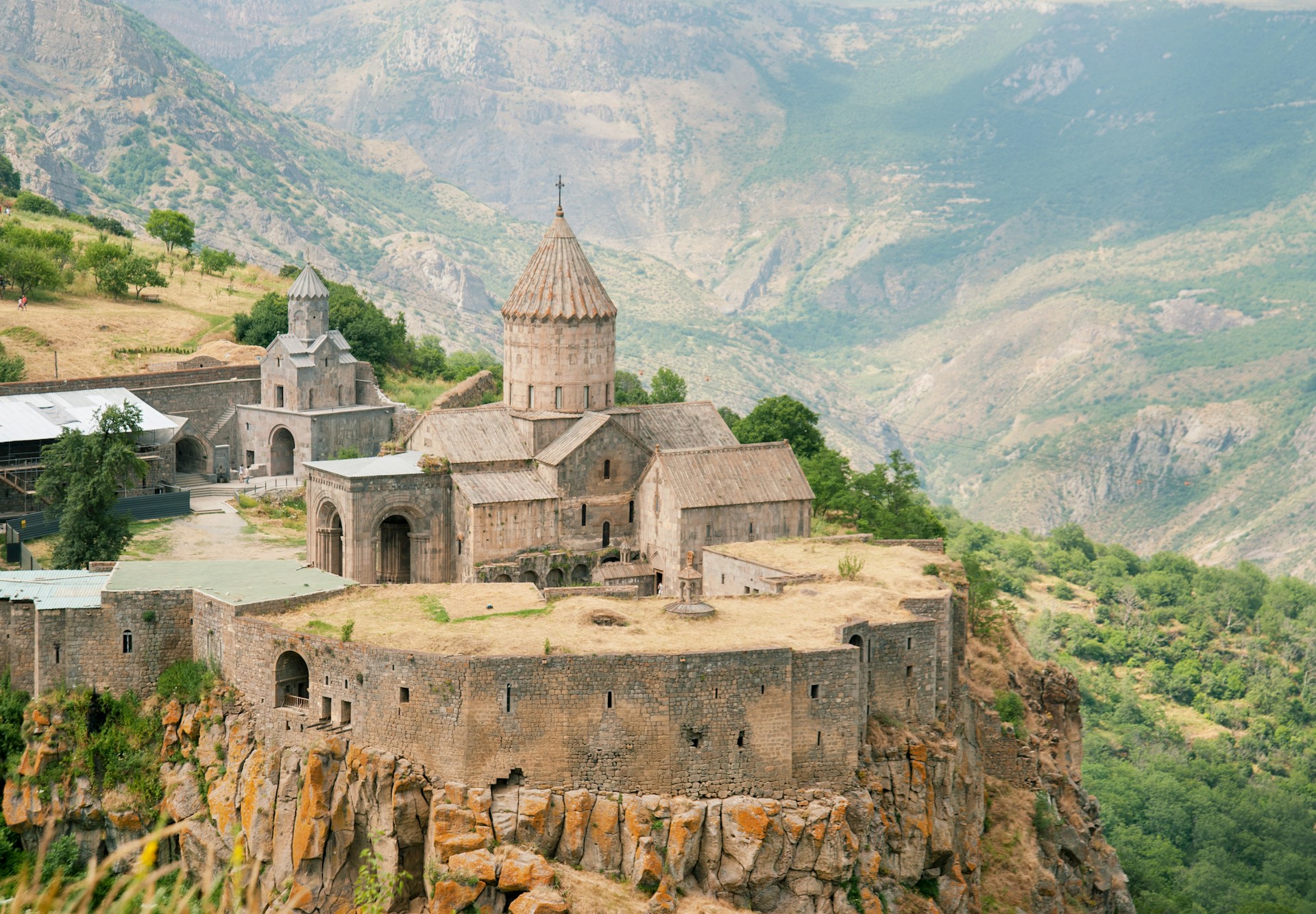
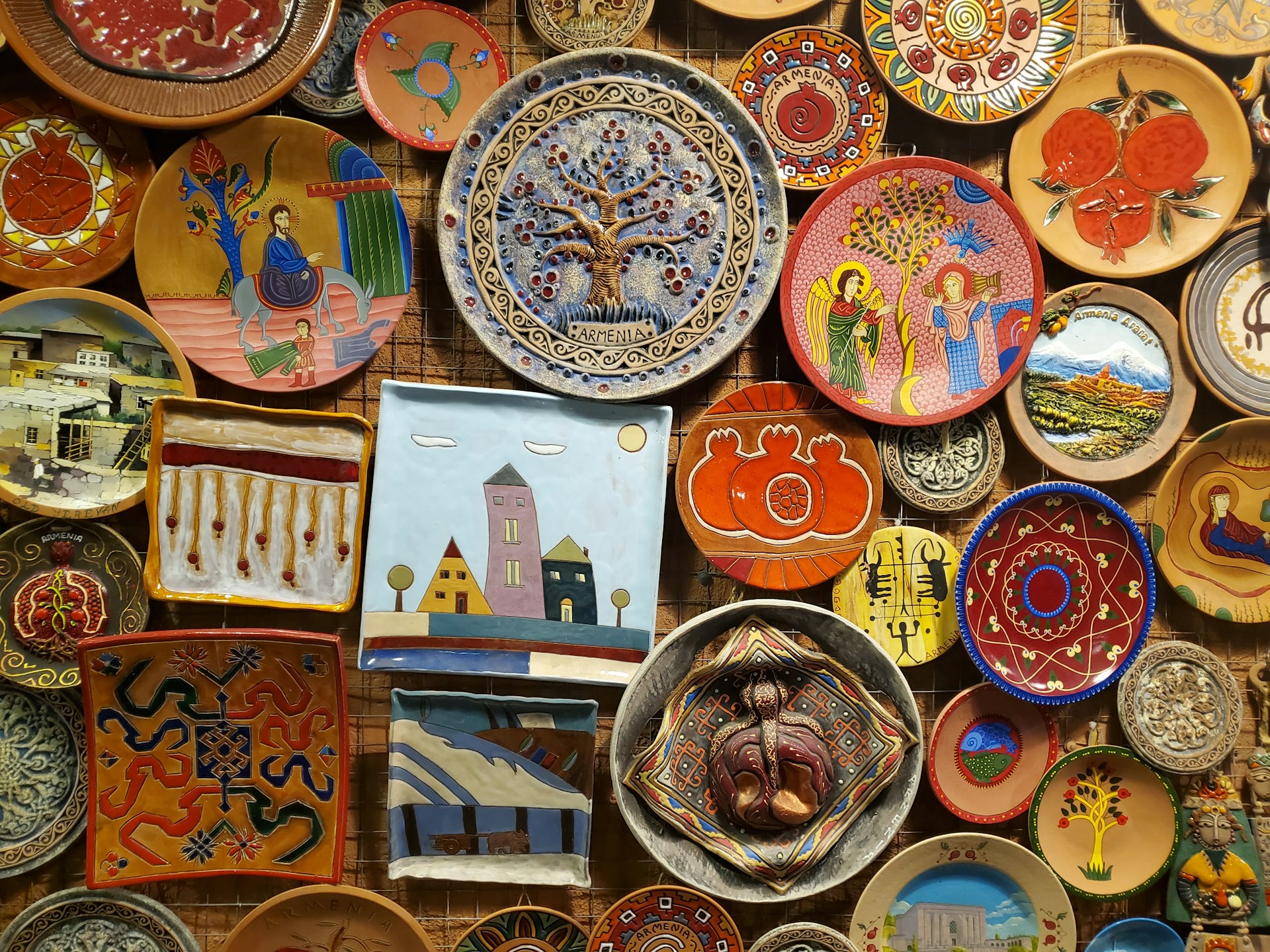
The Caucasus is a fascinating region situated between Europe and Asia, encompassing the countries of Azerbaijan, Georgia and Armenia.
Renowned for its ancient history, diverse cultures, spectacular mountain landscapes and Silk Road heritage, it remains one of the world’s most rewarding travel destinations. Explore UNESCO World Heritage Sites, Silk Road towns, medieval monasteries, vibrant capitals and spectacular natural scenery. Along the way, enjoy warm local hospitality, traditional cuisine and authentic cultural experiences that bring this fascinating region to life.
Highlights
Azerbaijan
- Explore Baku’s UNESCO-listed Old City and its centuries of history
- Discover the ancient rock art of Gobustan National Park and Azerbaijan’s remarkable Mud Volcanoes
- Experience the Silk Road heritage of Sheki, including the magnificent Khan’s Palace
Georgia
- Experience Georgia’s ancient wine traditions in the Kakheti region
- Marvel at the spectacular Caucasus Mountains and Gergeti Trinity Church
- Discover UNESCO-listed monasteries, medieval fortresses and the cave city of Vardzia
- Experience Georgia’s renowned hospitality with family-hosted lunches, winery visits and tastings in the heart of the Kakheti wine region.
Armenia
- Explore Armenia’s remarkable monasteries and UNESCO World Heritage Sites
- Experience the stunning scenery of Lake Sevan, Dilijan National Park and Mount Aragats
- Ride the spectacular Wings of Tatev cable car to one of Armenia’s most treasured monasteries
- Gain insight into Armenian culture through village visits, traditional bread-making demonstrations and family meals showcasing centuries-old customs and traditions.
Tour Itinerary
We commence the tour with an overnight flight to Dubai.
We arrive in Dubai early this morning and after clearing Customs and Immigration formalities, we are met and transferred to our hotel for an over-night stay. There is time to rest up after the flight until mid-afternoon when we visit the Museum of the Future. One of Dubai’s most famous landmarks, the museum takes pride of place along the city’s superhighway, Sheikh Zayed Road. Founded by the Dubai Future Foundation and launched on 22 February 2022, the museum explores how society could evolve in the coming decades using science and technology. Each floor of the museum is designed like an expansive, interactive movie set, brought to life by expert storytellers, technologists and visionary artists. There is time for exploration before we return to the hotel for dinner this evening.
Late morning, we transfer to the airport to join our short flight to Baku. On arrival, we are met and transferred to our hotel for a 3-night stay. Enjoy a welcome dinner together this evening.
Today we travel southwest of Baku to Gobustan, home to the UNESCO-listed Gobustan Rock Art Cultural Landscape. We visit the fascinating Rock Art Museum before exploring the open-air reserve, where thousands of ancient rock carvings provide a remarkable glimpse into human life dating back thousands of years.
We then continue to one of Azerbaijan’s most unusual natural attractions – the famous mud volcanoes. Reaching this fascinating landscape is an experience in itself, as we travel by old Soviet-style vehicles (subject to availability, otherwise by jeep) across the rugged terrain to see these bubbling natural formations up close.
Returning to Baku, we enjoy lunch before visiting the Azerbaijan Carpet Museum, home to the world’s largest collection of Azerbaijani carpets. Its impressive displays showcase the country’s rich carpet-making heritage, with examples from different periods featuring a variety of traditional weaving techniques, patterns and materials.
We finish our sightseeing with a visit to the striking Heydar Aliyev Centre, one of Baku’s most recognisable examples of contemporary architecture. Designed by renowned Iraqi-British architect Zaha Hadid, the building is famous for its sweeping curves and distinctive flowing design and has become an iconic symbol of modern Baku.
Today we continue our exploration of Baku, beginning at Highland Park, where we enjoy panoramic views across the city and the Caspian Sea. We then discover Baku’s UNESCO-listed Old City, wandering through its atmospheric narrow streets and exploring centuries of history within the ancient city walls. Highlights include historic baths and mosques, the iconic Maiden Tower, old caravanserais once used by travelling merchants, and a visit to the impressive Palace of the Shirvanshahs.
After lunch, we travel to the Absheron Peninsula to discover two of Azerbaijan’s most fascinating landmarks associated with the region’s natural reserves of gas and its ancient connection with fire. We visit Ateshgah, the historic Fire Temple, before continuing to Yanar Dag, or ‘Burning Mountain’, where natural gas escaping through the earth has created flames that continuously burn along the hillside.
After breakfast, we check out of our hotel and travel northwest through Azerbaijan’s ever-changing countryside towards the historic town of Sheki. Today’s scenic journey takes us through a remarkable variety of landscapes, from semi-desert plains and lush forests to the foothills of the Caucasus Mountains.
Our first stop is the village of Maraza, where we visit the fascinating Diri Baba Mausoleum, dramatically built into the side of a rocky cliff. We then continue to Shamakhi, the former capital of the Shirvanshah dynasty, to visit the historic Juma Mosque, one of Azerbaijan’s most important places of worship.
From here, we take a spectacular mountain road to the remote village of Lahic. Isolated by its mountainous setting, Lahic has preserved its distinctive culture, traditions and language over the centuries. The village is particularly renowned for its skilled craftspeople and centuries-old tradition of copperwork, and we have time to explore its charming cobbled streets and artisan workshops. Later, we continue our journey to Sheki, one of Azerbaijan’s oldest and most charming destinations, where we settle in for our stay.
Please note: Our visit to Lahic is subject to weather and road conditions. In the event the mountain road is not passable, an alternative arrangement will be made.
After breakfast, we begin our exploration of Sheki, once an important trading centre along the ancient Silk Road and today one of Azerbaijan’s most charming towns. We wander through the atmospheric old town, visiting its colourful bazaar and historic Caravanserai before continuing to the magnificent Sheki Khan’s Palace, renowned for its intricate wall paintings and beautiful Shebeke stained-glass windows.
We then have the opportunity to try our hand at the traditional art of Shebeke during a visit to a local glass workshop, where we learn more about this intricate centuries-old craft.
After lunch, we travel a short distance to the picturesque village of Kish, where we visit its ancient Albanian-Christian church, dating from the 11th–12th centuries. We finish our visit in true local style, enjoying a cup of fragrant Azerbaijani tea in a nearby village home before returning to Sheki.
Today we farewell Azerbaijan and cross the border into neighbouring Georgia, where we are warmly welcomed by our Georgian guide. From here, we journey into Kakheti, the heart of Georgia’s celebrated wine country. Surrounded by vineyards and picturesque countryside, we discover not only the wines for which the region is famous, but also the traditions, history and everyday life that make Kakheti so special.
A highlight of our day is a visit to one of the country’s few remaining traditional qvevri makers. Here, we learn about the ancient Georgian method of producing wine in large clay vessels buried beneath the ground – a tradition that has been practised for thousands of years and is recognised by UNESCO as part of the Intangible Cultural Heritage of Humanity.
Naturally, there will also be an opportunity to sample some locally produced wines, along with chacha, Georgia’s traditional grape spirit, providing a wonderful introduction to the country’s renowned wine culture and hospitality.
This morning, we visit a local farmers’ market before continuing to the impressive 11th-century Alaverdi Cathedral. Later, we visit a local winery, where an engaging museum provides an insight into Georgia’s fascinating winemaking traditions and techniques. Naturally, there will also be an opportunity to sample a selection of locally produced wines made using traditional Georgian methods.
At the winery we’ll take part in preparing several traditional Georgian dishes: Khinkali — dumplings filled with meat and broth, and Khachapuri — a savory cheese-filled bread. We’ll also try making Churchkhela, a local delicacy made from grape juice and walnuts. And of course, we’ll bake our own bread and enjoy eating it fresh!
Our last stop before returning to the hotel will be the estate of the 19th century poet and nobleman Aleksandre Chavchavadze in Tsinandali (closed on Mondays). His house, the main house, is also a museum. The aristocratic Chavchavadze family was one of the most talented and powerful families throughout Georgia. This place was a centre of intellectual life and is much frequented by famous Georgian and foreign writers (including Alexander Dumas). Aleksandre offered his guests fine wines made at his estate. He was the one who possessed the oldest and largest winery in Georgia, where he combined European and Georgian winemaking traditions. The house is surrounded by beautiful gardens covering 18 hectares. They contain a variety of European, Asian and American plants and a walk in the park is also a must. Furthermore, there is also a small labyrinth with a wishing tree in the middle, which is worth visiting.
Today we drive towards Sighnaghi but first make a stop at the Bodbe Monastery (4th–17th century), located less than five minutes from the town. The monastery is still active today and ranks among the most important pilgrimage sites in Georgia, thanks to its association with St. Nino, the 4th-century female evangelist of the Georgians, whose remains buried here.
Our journey then takes us to the fortified town of Sighnaghi (18th century), often compared to an Italian medieval hill town. Surrounded by 4.5 kilometers of defensive walls enclosing over 40 hectares, it is one of the largest fully walled cities in the world. Recently restored, Sighnaghi offers visitors a blend of traditional charm and modern atmosphere. Strolling through its cobbled streets, you will see typical houses with wraparound wooden balconies and red terracotta roofs, all adding to the town’s distinctive character. Sighnaghi is also renowned for its sweeping views of the Greater Caucasus Mountains.
After exploring the town and enjoying lunch, we continue our journey to the Georgian capital, Tbilisi.
After breakfast and meeting with your guide it’s time to see the ‘City that loves you’. You can immediately feel that the capital of Georgia has a long history of multicultural relationships and is still the bridge between Europe and Asia. Walking through the old parts of the city you can sense its history and learn more about its special religious status: everyone is welcome. That’s why you will see and visit different religious buildings: churches, synagogue, mosque. And not only religious buildings will capture your eye, but also the famous 19th century houses with colourful wooden balconies.
The city tour also goes to the statue of Mother Georgia and the old castle Narikala (4th century) from where you will be able to enjoy the great panoramic views over the city. In National Museum we visit a treasury that hosts a unique, unknown collection, so this is a highlight that can’t be missed. Another important place is the sulphur baths – well known to relax your mind after a long day full of impressions (we only see them from the outside).
Tonight, enjoy dinner at a local restaurant, accompanied by traditional Georgian music and lively folk dancing.
Today we travel to Mtskheta, Georgia’s ancient capital and spiritual heart. It was here that Christianity was proclaimed the state religion in the 4th century following the arrival of St Nino, and the town remains one of the country’s most important religious centres.
We visit two of Mtskheta’s UNESCO World Heritage treasures, beginning with the hilltop Jvari Monastery, an early medieval church overlooking the town and offering magnificent views across the surrounding valleys. We then continue to the impressive 11th-century Svetitskhoveli Cathedral, one of Georgia’s most sacred and architecturally significant churches.
Later, we leave the lowlands behind and journey north into the spectacular Greater Caucasus Mountains. Travelling along the Georgian Military Highway towards the mountain resort of Gudauri, we stop at the 17th-century Ananuri Fortress Complex, beautifully positioned overlooking the turquoise waters of the Zhinvali Reservoir.
Continuing higher into the mountains, we stop at the striking Friendship Monument near Gudauri. Perched dramatically above a deep gorge at an altitude of around 2,380 metres, the monument offers breathtaking panoramic views across the surrounding mountains and valleys.
Our journey then continues through magnificent alpine scenery to the mountain town of Stepantsminda, also known as Kazbegi. Set beneath the towering peak of Mount Kazbek, one of the highest mountains in Georgia, Stepantsminda provides a spectacular setting for our overnight stay.
This morning, we board 4WD vehicles for the scenic journey up to the iconic Gergeti Trinity Church. Perched high on a hillside at an altitude of 2,170 metres, this 14th-century church enjoys a spectacular setting amidst the towering peaks of the Greater Caucasus Mountains. After our visit, those who wish may enjoy the walk back down to Stepantsminda, taking in the magnificent mountain scenery along the way.
Later this afternoon, we enjoy a more personal local experience with a visit to a traditional artisan for a hands-on felt-making workshop. We learn about this centuries-old craft while enjoying a tasting of locally produced teas and jams – a lovely opportunity to experience some of the traditions and flavours of the region.
Today we travel to Gori, best known as the birthplace of Joseph Stalin. Here, we visit the Stalin Museum, which provides a fascinating insight into his life and legacy from a distinctly local perspective. Within the museum complex, we also see the modest house where Stalin was born and raised, along with his preserved private railway carriage.
We then journey much further back in time with a visit to Uplistsikhe, an extraordinary ancient rock-hewn settlement with origins dating back to the early first millennium BC. Once a thriving city carved into the rocky landscape, today its fascinating ruins include caves, tunnels, streets and ancient structures that offer a glimpse into life here thousands of years ago.
Later, we continue into the picturesque Ateni Gorge, where our charming small hotel awaits in a peaceful rural setting. This evening, we enjoy dinner prepared using fresh, locally sourced organic produce – a lovely way to end our day.
This morning, we enjoy an easy one-hour walk through the beautiful Borjomi-Kharagauli National Park, taking in the peaceful forest scenery and fresh mountain air.
Later, we travel to Akhaltsikhe to visit the impressive Rabati Fortress, a beautifully restored historic complex reflecting the many cultures and influences that have shaped this region over the centuries. Within its extensive walls, we discover an intriguing mix of architectural styles and historic buildings, including a castle, mosque with its distinctive golden dome, gardens and elegant courtyards.
We also visit the archaeological museum, home to a fascinating collection of artefacts that provide an insight into the rich history and heritage of southern Georgia.
Today we explore one of Georgia’s most remarkable historic sites – the extraordinary cave city of Vardzia. Carved into the cliffs during the 12th century, this vast complex was once hidden within the mountainside and developed into a thriving community of dwellings, churches, wine cellars and passageways. A powerful earthquake in the 13th century exposed much of the once-concealed city, revealing the fascinating network of caves that we see today. As we explore the complex, we discover hundreds of rooms connected by tunnels and stairways, offering a wonderful insight into life here during medieval times.
Today we farewell Georgia and cross the border into neighbouring Armenia at Bavra, continuing to Gyumri, the country’s second-largest city. After checking into our hotel and enjoying lunch, we set out to discover this characterful city, renowned for its strong traditions, skilled craftspeople and distinctive atmosphere.
During our walking tour, we explore Gyumri’s historic centre, where elegant 19th-century buildings sit alongside reminders of the city’s Soviet past. Along the way, we enjoy some wonderful glimpses into local life, visiting a traditional blacksmith’s workshop, Armenia’s oldest brewery and a fascinating historic barber shop that has remained virtually unchanged for almost a century. These encounters provide a wonderful introduction to Gyumri’s craftsmanship, heritage and enduring traditions.
After breakfast, we farewell Gyumri and journey towards the beautiful Debed region, travelling through the scenic landscapes of northern Armenia. Our first stop is in Vanadzor, where we meet a traditional khachkar master and learn about the centuries-old art of carving Armenia’s distinctive cross-stones. Recognised by UNESCO as part of the country’s Intangible Cultural Heritage, we have the opportunity to see first-hand the skill and craftsmanship involved in creating these intricate works of art.
We then continue to the magnificent Haghpat Monastery, a UNESCO World Heritage Site dating from the 10th century. Set amongst the dramatic landscapes of the Debed Canyon, this beautifully preserved monastery is considered one of the finest examples of medieval Armenian religious architecture and was once an important centre of learning and spiritual life.
Later this afternoon, we continue to Dzoraget, where we check into our hotel and enjoy the peaceful surroundings of the Debed region for our overnight stay.
After breakfast, we leave Dzoraget and journey towards the beautiful forests and mountain landscapes of Dilijan National Park. Along the way, we stop in the village of Fioletovo, home to Armenia’s Molokan community, a Russian religious minority who settled here during the 19th century. During our visit, we are welcomed into the community to learn about their distinctive history, traditions and way of life, while enjoying traditional tea served from a samovar. This provides a fascinating glimpse into one of Armenia’s lesser-known cultures.
Later, we continue through the forested landscapes of Dilijan National Park to the beautiful Haghartsin Monastery. Hidden amongst the trees, this peaceful medieval monastery complex enjoys a wonderfully secluded setting and is considered one of Armenia’s most picturesque religious sites.
At the end of the day, we arrive in the charming mountain town of Dilijan, often referred to as the ‘Armenian Switzerland’ for its forest-covered hills and beautiful natural surroundings, where we settle in for our overnight stay.
This morning, we leave Dilijan and journey towards the beautiful shores of Lake Sevan, one of the largest high-altitude freshwater lakes in the world. We visit the peacefully situated Hayravank Monastery, enjoying its wonderful setting overlooking the lake, before continuing to Noratus, home to Armenia’s largest collection of intricately carved khachkars (cross-stones).
Our journey then takes us through spectacular mountain scenery as we cross the Selim Pass. Along the way, we stop at the remarkably well-preserved 14th-century Selim Caravanserai, once an important resting place for merchants and their caravans travelling along the ancient Silk Road. Standing in this remote mountain setting, it offers a fascinating glimpse into the journeys made by traders centuries ago.
Later this afternoon, we continue through the scenic landscapes of southern Armenia to the picturesque town of Goris, where we settle in for our overnight stay.
Today we journey to one of Armenia’s most spectacular landmarks, the magnificent Tatev Monastery. Our visit begins with a memorable ride aboard the Wings of Tatev, the world’s longest reversible aerial tramway, soaring high above the dramatic Vorotan Gorge. Perched on a rocky plateau overlooking the canyon, the monastery was once one of medieval Armenia’s most important religious, cultural and educational centres.
Later, we continue to the fascinating cave village of Khndzoresk. We cross the impressive suspension bridge spanning the gorge before exploring this remarkable historic settlement, where generations of families lived in cave dwellings carved into the cliffs until the 20th century. As we explore, we learn about the history and traditional way of life of this unique canyon community.
At the end of the day, we return to Goris for a second overnight stay.
After breakfast, we leave Goris and travel north through the beautiful landscapes of southern Armenia. Our first stop is Zorats Karer (Karahunj), one of the country’s most mysterious prehistoric sites. Often referred to as the ‘Armenian Stonehenge’, this fascinating collection of ancient standing stones continues to intrigue archaeologists and visitors alike.
We then continue to the remarkable Areni-1 Cave, where archaeological discoveries have included one of the world’s oldest known winemaking facilities and the oldest preserved leather shoe ever found. Nearby, in the village of Areni, we are welcomed by a local family for a homemade lunch accompanied by a tasting of locally produced wines – a wonderful opportunity to experience Armenian hospitality and learn more about the region’s centuries-old winemaking traditions.
Our journey continues to the spectacular Noravank Monastery, dramatically situated amongst towering red-rock cliffs. Dating from the 13th century, its striking architecture and magnificent natural setting make it one of Armenia’s most memorable monastery complexes.
Time permitting, we will also visit Khor Virap Monastery, one of Armenia’s most important pilgrimage sites. Set against the backdrop of Mount Ararat, the monastery is renowned for its spectacular views of the biblical mountain and holds a special place in Armenia’s Christian history. Later this afternoon, we continue to Yerevan, Armenia’s vibrant capital, where we check into our hotel for our stay.
Today we explore Yerevan, Armenia’s vibrant capital and one of the world’s oldest continuously inhabited cities. During our city tour, we discover many of its key landmarks, including impressive Republic Square, historic Abovyan Street, lively Northern Avenue and the elegant Opera House. We also visit the striking Cascade Complex, an impressive open-air stairway and contemporary arts centre featuring sculptures, gardens and wonderful panoramic views across the city.
Later, we experience another side of local life with a visit to either the colourful Vernissage arts and crafts market or the bustling GUM Food Market. Depending on our visit, there will be an opportunity to browse locally made handicrafts and souvenirs, or discover an enticing array of Armenian produce including fresh and dried fruits, spices, cheeses, traditional breads and other local specialities.
Today we leave Yerevan and travel to the impressive Garni Temple, the only surviving Greco-Roman temple in the Caucasus and one of Armenia’s most distinctive ancient landmarks. From here, we continue into the beautiful Azat River Gorge to see the remarkable Symphony of Stones, a natural formation of towering basalt columns resembling the pipes of a giant organ.
At lunchtime, we enjoy a traditional Armenian meal in Garni, accompanied by a demonstration of lavash making. We watch as Armenia’s famous flatbread is prepared and baked in a traditional underground tonir oven, learning about a centuries-old culinary tradition recognised by UNESCO as part of the country’s Intangible Cultural Heritage.
This afternoon, we visit the magnificent Geghard Monastery, a UNESCO World Heritage Site dramatically set amongst the surrounding cliffs. Partially carved directly into the rock, this remarkable medieval monastery is renowned for its beautiful architecture, acoustics and peaceful spiritual atmosphere.
After our sightseeing, we return to Yerevan, with the remainder of the evening at leisure.
After breakfast, we travel to Zvartnots to explore the impressive ruins of its 7th-century cathedral, now recognised as a UNESCO World Heritage Site. We then continue to Etchmiadzin Cathedral, the spiritual heart of the Armenian Apostolic Church and considered one of the oldest Christian cathedrals in the world. As the religious centre of Armenia, Etchmiadzin holds enormous cultural and spiritual significance for the Armenian people.
Following our visit, we enjoy lunch in Etchmiadzin before returning to Yerevan. The remainder of the afternoon is at leisure, providing time to relax, perhaps do some last-minute shopping or simply enjoy a final wander through the city at your own pace.
This evening, we gather for a special farewell dinner, enjoying traditional Armenian cuisine and warm hospitality as we reflect on the many memorable experiences shared during our journey through the Caucasus.
Sadly, our adventure draws to a close and we begin our journey home. We take a short flight to Dubai, arriving mid-afternoon with overnight accommodation reserved at the airport.
Time for the last leg of our journey on our flight home.
Arrival time in Auckland is mid-morning.
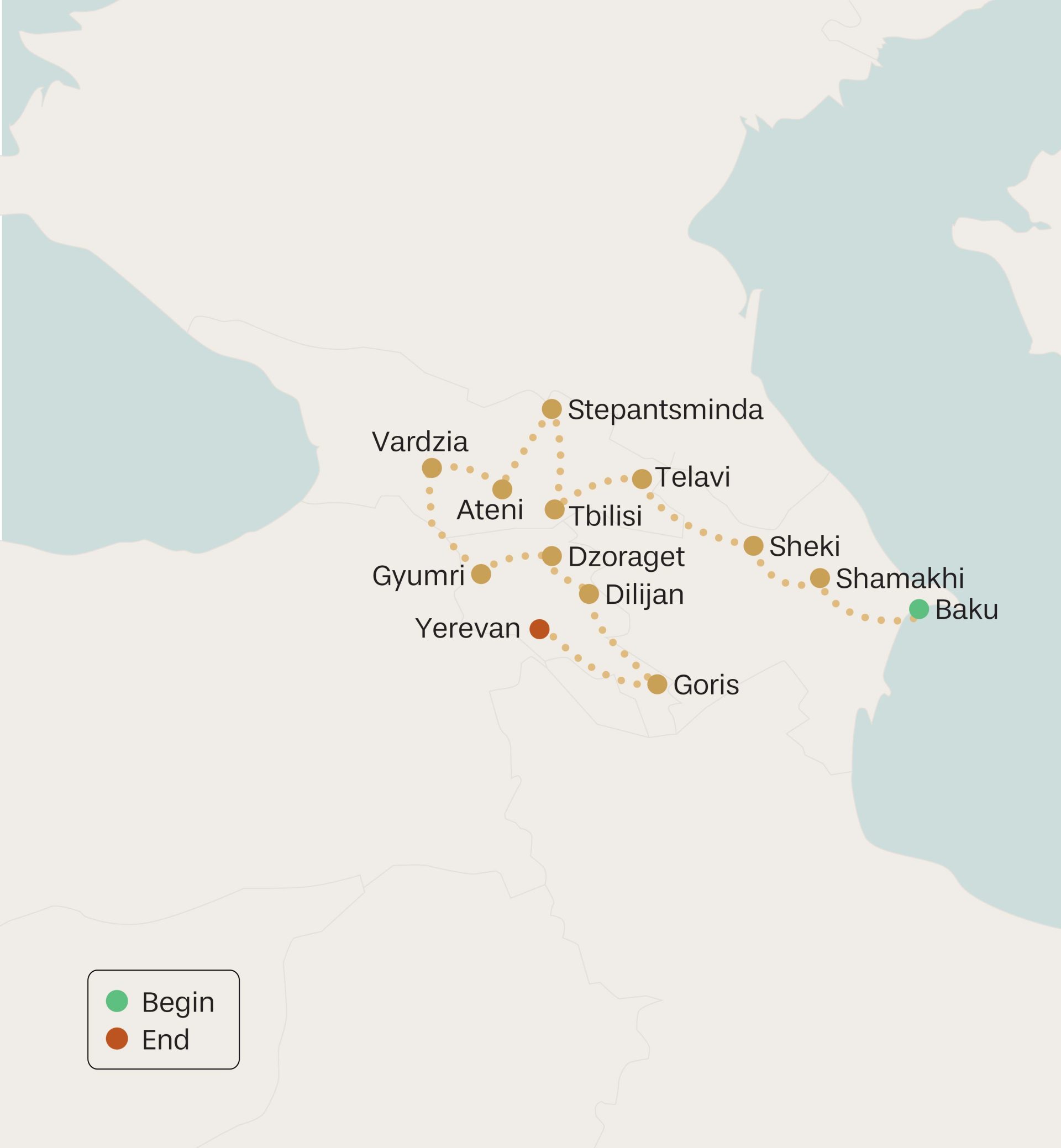
Highlights Reel
Inclusions
- Economy Class Air Travel ex Auckland (upgrade to Premium Economy or Business Class available at additional cost)
Prepaid government, airport, security, port taxes and charges - First Class hotel accommodation
- Meals as indicated in the itinerary
Sightseeing and entrance fees as indicated in the itinerary - English speaking local hosts and guides as appropriate
- Baggage handling of 1 suitcase per person – where possible
- Tips to local guides, coach drivers, cruise staff
- Escorted by Maher Tours Leader
Exclusions
- Any meals and sightseeing not specifically mentioned in the itinerary
- Passport and Visa Fees
- Travel insurance – advice and assistance offered
- Items of a personal nature such telephone charges, laundry, drinks etc.