Discover Japan during the Blossom Season.
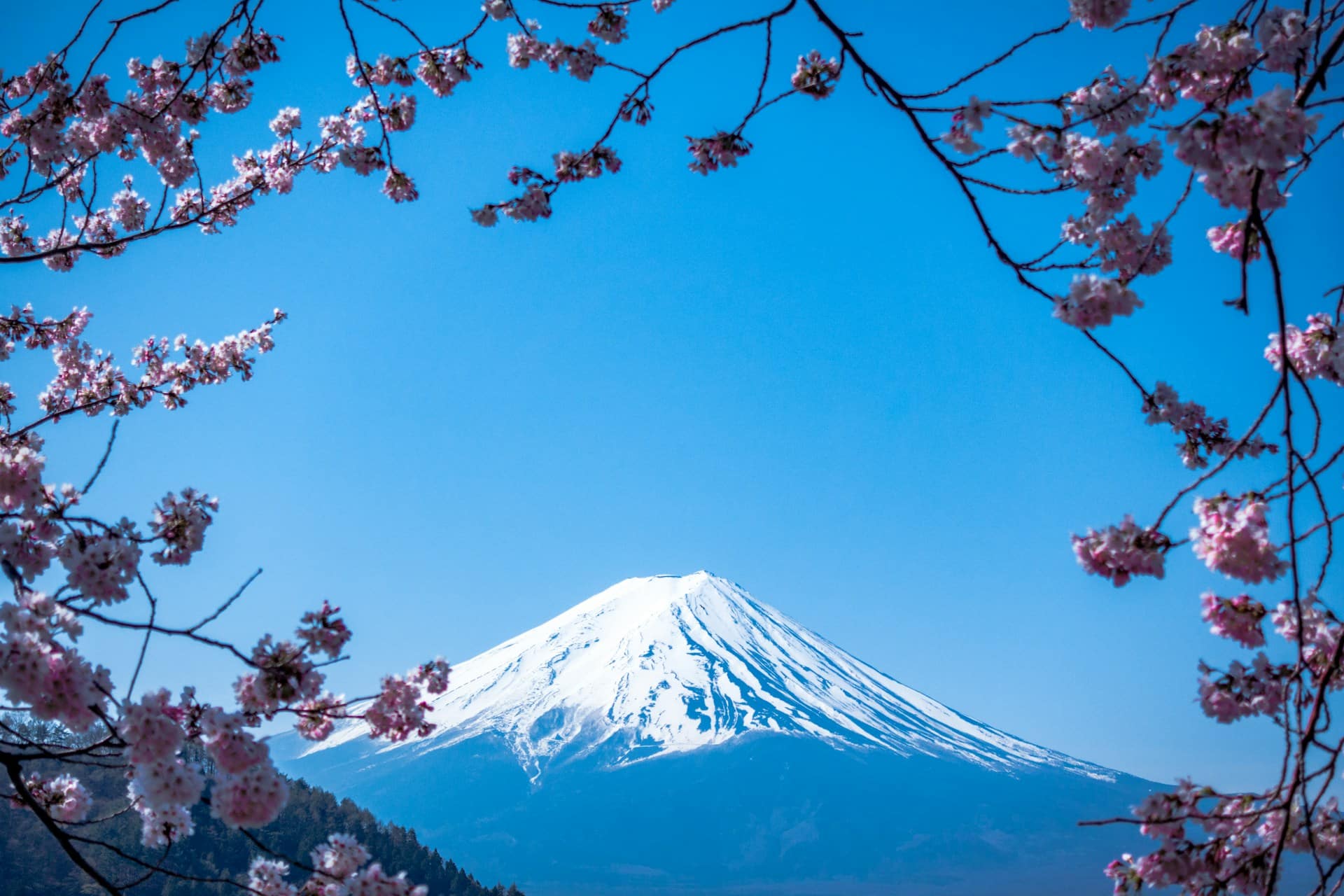
We are venturing to Japan, Land of the Rising Sun, in time to enjoy the Cherry Blossom season. The cherry blossom (sakura) has been celebrated in Japan for many centuries and holds a very particular place in Japanese culture. Although there are many varieties of cherry tree in Japan, most bloom for just a couple of days in spring. The Japanese celebrate this time of the year with hanami (cherry blossom viewing) parties: friends, family or work colleagues gather and sit on plastic mats under the blossoming trees, to drink, sing, chat or just admire the spectacle.
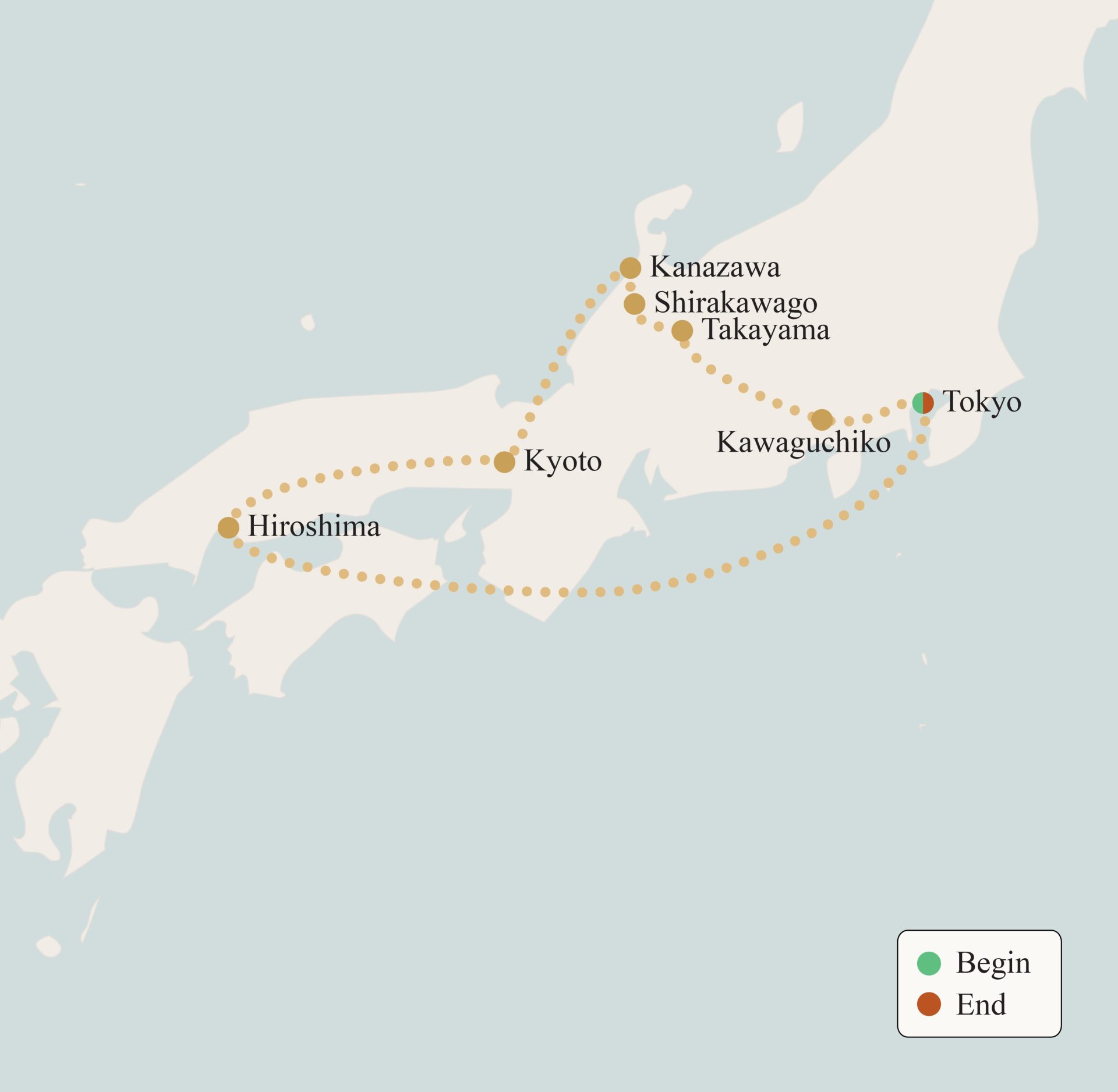
On this tour we experience the perfect blend of tradition and modernity on this immersive journey through Japan. Explore Tokyo’s bustling streets, iconic temples, and sumo culture, then relax in the scenic Mt. Fuji region at Lake Kawaguchiko. Travel to historic Takayama and charming Shirakawago, before discovering Kanazawa’s gardens, samurai houses, and geisha heritage. In Kyoto, visit ancient temples, serene gardens, and the famous Arashiyama Bamboo Forest, with a day trip to Nara to meet its friendly deer. Conclude in Hiroshima, reflecting at Peace Memorial Park and exploring the city’s historic and cultural landmarks. This journey combines Japan’s iconic sights, cultural experiences, and natural beauty for an unforgettable adventure.
Watch our highlights and promotional video to get a taste of the incredible journey that awaits:
Highlights
- Explore Tokyo, Japan’s vibrant capital, including Tokyo Tower, Meiji Jingu Shrine, Asakusa Kannon Temple, Nakamise Street, and a sumo training session.
- Enjoy the scenic beauty of Mt. Fuji and Lake Kawaguchiko, including the 5th Station, Oshino Hakkai ponds, and Ichiku Kubota Art Museum.
- Discover Takayama’s preserved Edo-period streets, Takayama Jinya, Sanmachi-suji, and Kusakabe Folk Museum.
- Visit Shirakawago and its traditional gassho-zukuri farmhouses at the open-air Gasshozukuri Minkaen Museum.
- Explore Kanazawa, including Kenroku-en Garden, Higashi Chaya geisha district, and Nagamachi Samurai House.
- Experience Kyoto’s cultural treasures: Nijo Castle, Tea Ceremony, Kiyomizu Temple, Tenryuji Temple, Arashiyama Bamboo Forest, and Kinkakuji Temple.
- Visit Nara to see the famous free-roaming deer, Todaiji Temple, and Kasugataisha Shrine.
- Reflect on history in Hiroshima at Peace Memorial Park, Shukkeien Gardens, and Hiroshima Prefectural Art Museum.
Tour Itinerary
We depart Auckland this morning for our flight to Tokyo – the capital of Japan – a city of marvellous contrasts, its past and present meshing seamlessly. The major gateway into Japan, Tokyo is the logical start for our exploration of northern Japan. On arrival late afternoon, we are met and transferred to our hotel for a three-night stay.
Tokyo is the capital of Japan. At over 12 million people in the official metropolitan area alone, Tokyo is the core of the most populated urban area in the world, Greater Tokyo (which has a population of 35 million people).
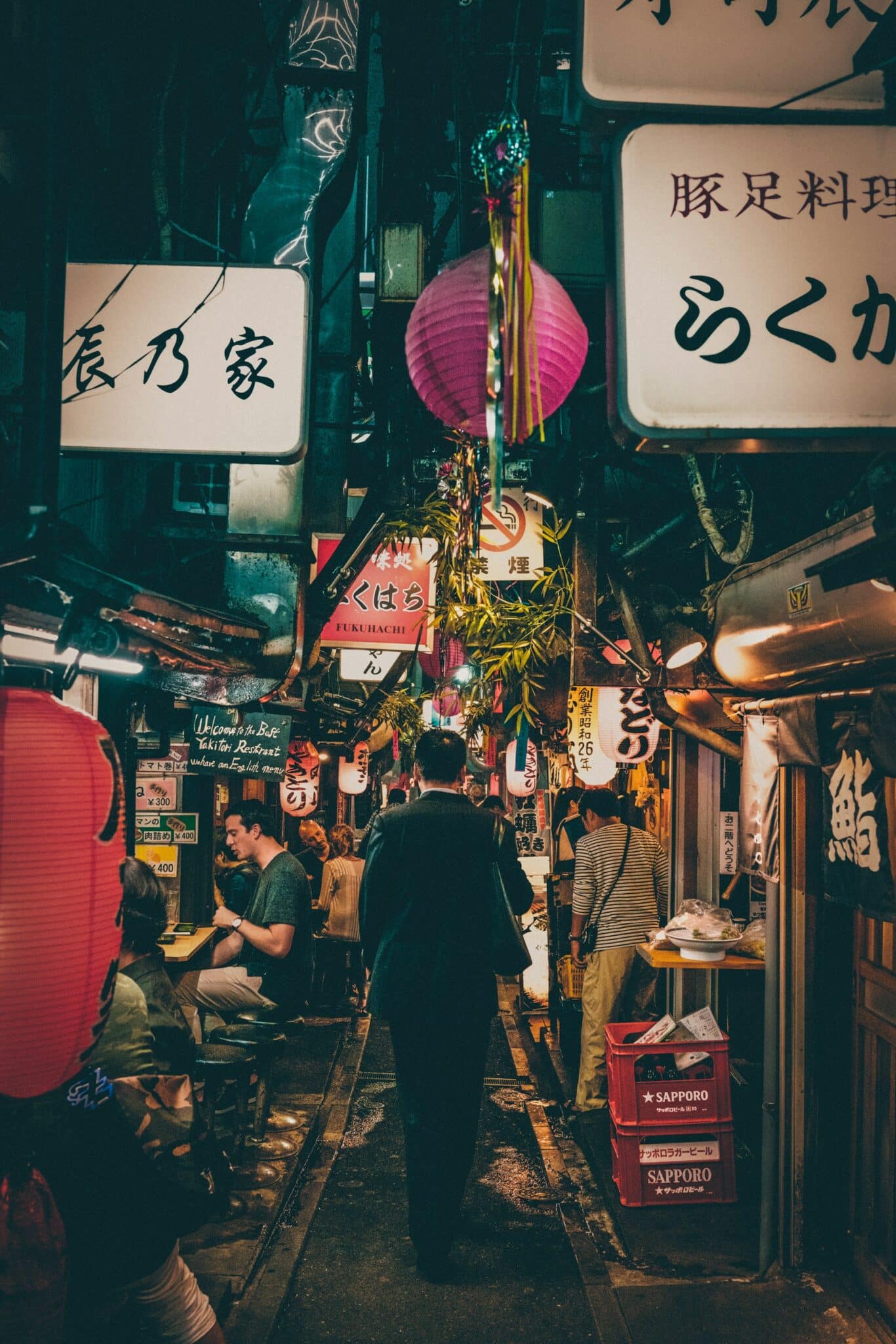
This huge, wealthy and fascinating metropolis brings high-tech visions of the future side by side with glimpses of old Japan and has something for everyone. Today we visit Tokyo Tower and Meiji Jingu Shrine before enjoying lunch at a local restaurant. Afterwards, we continue our touring and see Asakusa Kannon Temple and Nakamise Street before returning to our hotel late afternoon. Dinner is included at the hotel this evening.
This morning, we visit a sumo training centre in Tokyo to observe the morning practice. We spend approximately two hours watching the sumo wrestlers train and observe the rules and regulations of sumo. It’s a rare chance for visitors to glimpse this exclusive world, and a fascinating window into a Japanese tradition. We then visit Hama Rikyu Gardens before enjoying lunch at a local restaurant in the Ginza area. The afternoon is free to relax, or you may like to continue exploring on your own. We meet for dinner later this evening.
There are many places to enjoy stunning views of Mt. Fuji, but few are as picturesque an area as Lake Kawaguchiko. The biggest and most accessible of Fuji’s five lakes, Kawaguchiko has a wealth of natural resources, with stunning autumn leaves, cherry blossoms and flower festivals galore. Our itinerary takes you on a leisurely exploration of some great sights in the Lake Kawaguchiko area, including the Mt. Fuji Ropeway, Saiko Iyashi no Sato Historical Village and Oishi Park (time permitting) – with plenty of opportunities to enjoy the view of Mt. Fuji. We spend two nights in Kawaguchiko.
Today we enjoy sightseeing in the Mt. Fuji area. Mount Fuji is Japan’s highest mountain at 3,776 m (12,389 ft). The perfect volcanic cone dominates the area of the Fuji-Hakone-Izu National Park, and the area has recently been designated a UNESCO World Heritage Site as “Fujisan, sacred place and source of artistic inspiration”.
We travel up to the “5th Station”, halfway up the mountain at 2,300m. This spot is a preparation point for those climbing the mountain, and has shops, lodgings and facilities. From here we visit Ichiku Kubota Art Museum, enjoy lunch at a local restaurant, followed by a visit to the eight ponds of Oshino Hakkai – renowned for their mineral-rich spring water, before we return to our hotel in Kawaguchiko.
Today, we travel by coach to Mishima station where we have time to purchase lunch (own account), before we board the JR ‘Bullet’ Train to Nagoya and then continue on to Takayama where we spend two nights.
Hida-Takayama – locally known as Takayama – is a city near the northern Japan Alps of Gifu prefecture in the Chubu region, which has retained a traditional atmosphere like few other Japanese towns, especially in its beautifully-preserved old town. The city is famous for its well-preserved quarter with Edo-style streets, only rivalled by those of Kanazawa. It gained importance as a source of high-quality timber and highly skilled carpenters in feudal times. The Takayama Festival, held in spring and autumn, is considered one of Japan’s best festivals. Our sightseeing here includes Takayama Jinya, the former local government office, Sanmachi-suji street and Kusakabe Folk Museum.
After checking out of our hotel this morning, we travel by coach to Shirakawago where we visit Gasshozukuri Minkaen – an open-air museum with traditional gassho-zukuri farmhouses, a temple and watermill. After lunch, we visit Kanda House before continuing to Kanazawa, where we stay for 2-nights.
Kanazawa sits on the Sea of Japan coast, bordered by the Japan Alps, Hakusan National Park and Noto Peninsula National Park. Kanazawa is part of the UNESCO Creative Cities Network as a City of Crafts and Folk Art. While here we visit Higashi chayagai – a historical geisha house in the Higashi Chaya-gai district of Kanazawa. The building is now a museum and gives visitors a look at the life of the geisha who once entertained here. Many of the former geisha houses in this area have been converted into guest houses or restaurants. However, this house is dedicated to preserving and exhibiting memories of the past and is now a nationally designated Important Cultural Asset. After our visit, we see Japan’s most celebrated Kenroku-en Garden before lunch at a local restaurant. In the afternoon, we visit Nagamachi Samurai House before returning to our hotel with time to relax prior to dinner.
This morning, we take the train to Kyoto with the afternoon at leisure. We are based here for four nights to make the most of this wonderful part of Japan. We enjoy dinner this evening at a local restaurant.
A full day sightseeing today as we visit Nijo Castle – the only castle with surviving dozo earthen storehouses. While the purpose of dozo normally was to store grain, a unique characteristic of castles is that some storehouses were also used to store weapons. We then enjoy a special Tea Ceremony Experience before lunch. Afterwards, we visit
Kiyomizu Temple, Ninenzaka and Sannen-zaka. Returning the hotel, there is time at leisure before we meet for dinner this evening.
This morning, we visit Tenryuji Temple – an ancient sprawling Zen temple with one of the finest gardens in Kyoto and has wonderful mountain views. We then enjoy a short walk around Arashiyama Bamboo Forest, before lunch at a local restaurant. After visiting Kinkakuji temple, we return to our hotel to relax, prior to meeting for dinner this evening.
After breakfast, we join our coach for the journey to Nara. Here we visit the famous Nara Park, renowned for its free-roaming deer and world-famous temples. We have plenty of time to explore the park, including visits to Todaiji Temple and Kasugataisha Shrine. After lunch, we rejoin our coach and make our way back to Kyoto.
This morning, we depart by train to Hiroshima, the principal city of the Chugoku Region and home to over a million inhabitants. When the first atomic bomb was dropped over Hiroshima on August 6, 1945, the city became known worldwide for this unenviable distinction. The destructive power of the bomb was tremendous and obliterated nearly everything within a two-kilometer radius. After the war, great efforts were taken to rebuild the city. Predictions that the city would be uninhabitable proved false. On arrival mid-morning, we enjoy a tour of this now-thriving city and visit Peace Memorial Park – dedicated to the legacy of Hiroshima as the first city in the world to suffer a nuclear attack at the end of World War II, and to the memories of the bomb’s direct and indirect victims. At the conclusion, we check into our hotel for a 2-night stay with time refresh before dinner.
We enjoy a visit to Shukkeien Gardens this morning, a historical daimyo garden built in 1620. Although located in the center of Hiroshima city, the lush garden allows you to forget the hustle and bustle of the city and is a popular place of relaxation for many people both inside and outside of Hiroshima prefecture. We then visit Hiroshima Prefectural Art Museum, located adjacent to Shukkeien Garden. It houses over 5,200 works of art related to Hiroshima Prefecture, Japanese and Asian crafts, and works of art from the 1920s and 1930s, such as Dali’s “Dream of Venus.” doing. The collection is exhibited at exhibitions, which are changed about four times a year. The afternoon is free for you to explore this fascinating city at leisure – perhaps opt to visit the Hiroshima Castle.
After breakfast this morning, we join the train back to Tokyo. On arrival, check into the hotel and enjoy the afternoon at leisure before dinner at a local restaurant this evening.
After check out this morning, the day is yours to spend at leisure. Mid-afternoon, we meet back at the hotel to collect our stored luggage, prior to making our way to the airport in time to join our early evening flight.
Arrive Auckland mid morning.
Highlights Reel
Inclusions
- Economy Class travel from Auckland
- Upgrade to Premium or Business Class available at additional cost
- Prepaid government and airport taxes, security and fuel surcharges (as at 01/11/2026)
- Superior grade accommodation throughout
- Meals as indicated in the itinerary
- Air-conditioned coach and rail transportation for all touring
- Sightseeing and entrance fees as indicated in the itinerary
- English speaking local hosts and guides as appropriate
- Baggage handling of one suitcase per person – where possible
- Tips to local guides and coach drivers
- Fully escorted by a Maher Tours Leader
Exclusions
- Any meals and sightseeing tours not specifically mentioned in the itinerary
- Travel insurance – advice and assistance offered
- Items of a personal nature such as drinks, room service, laundry, telephone charges etc.